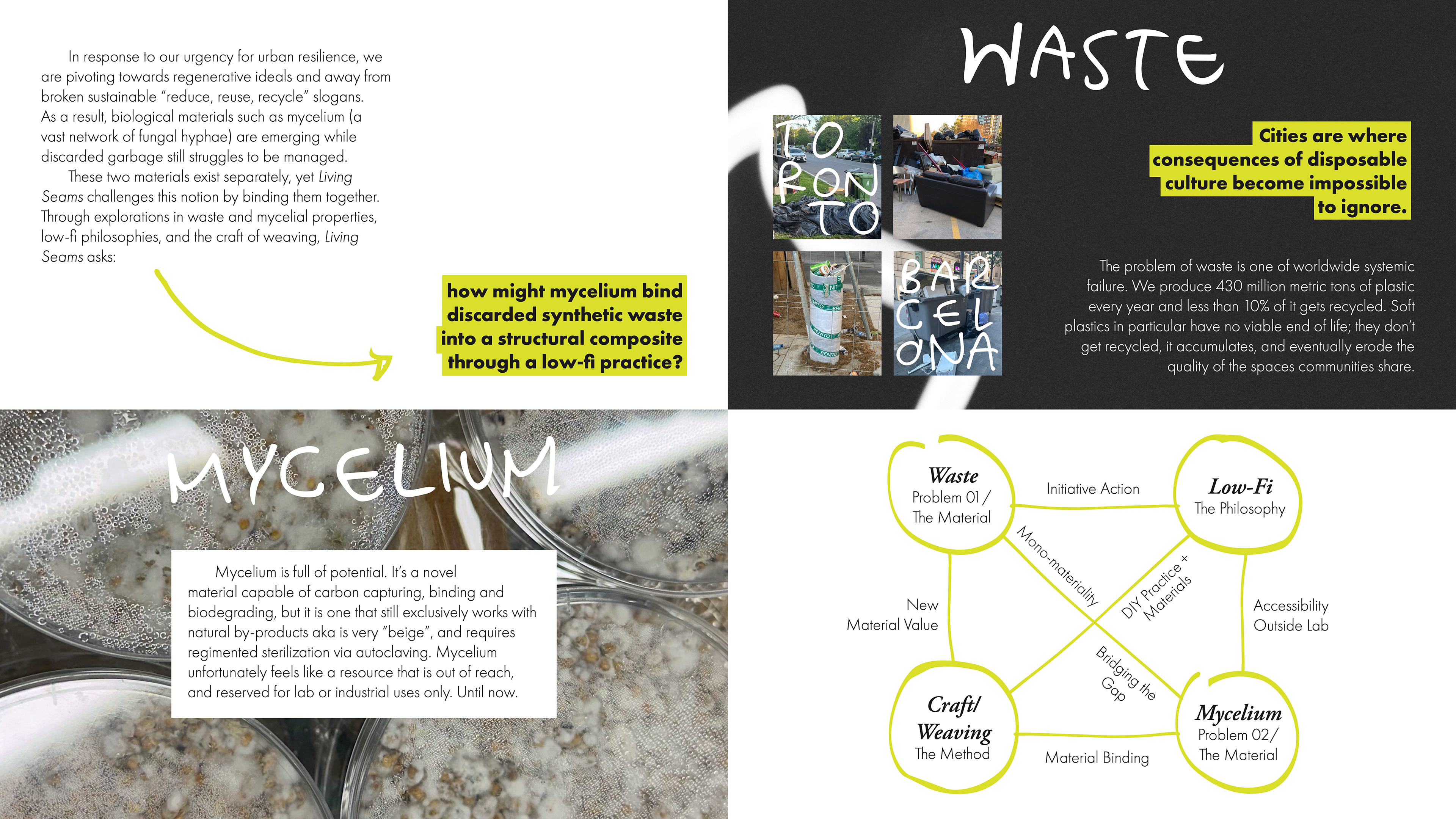

Up until now, applications of mycelium, a vast network of fungal hyphae, have been typecast in use: building blocks, packaging, wall panelling, or eco-textile alternatives. These have greatly overshadowed more unconventional futures. At the same time, we are at a turning point where we must confront our relationship with waste materials.
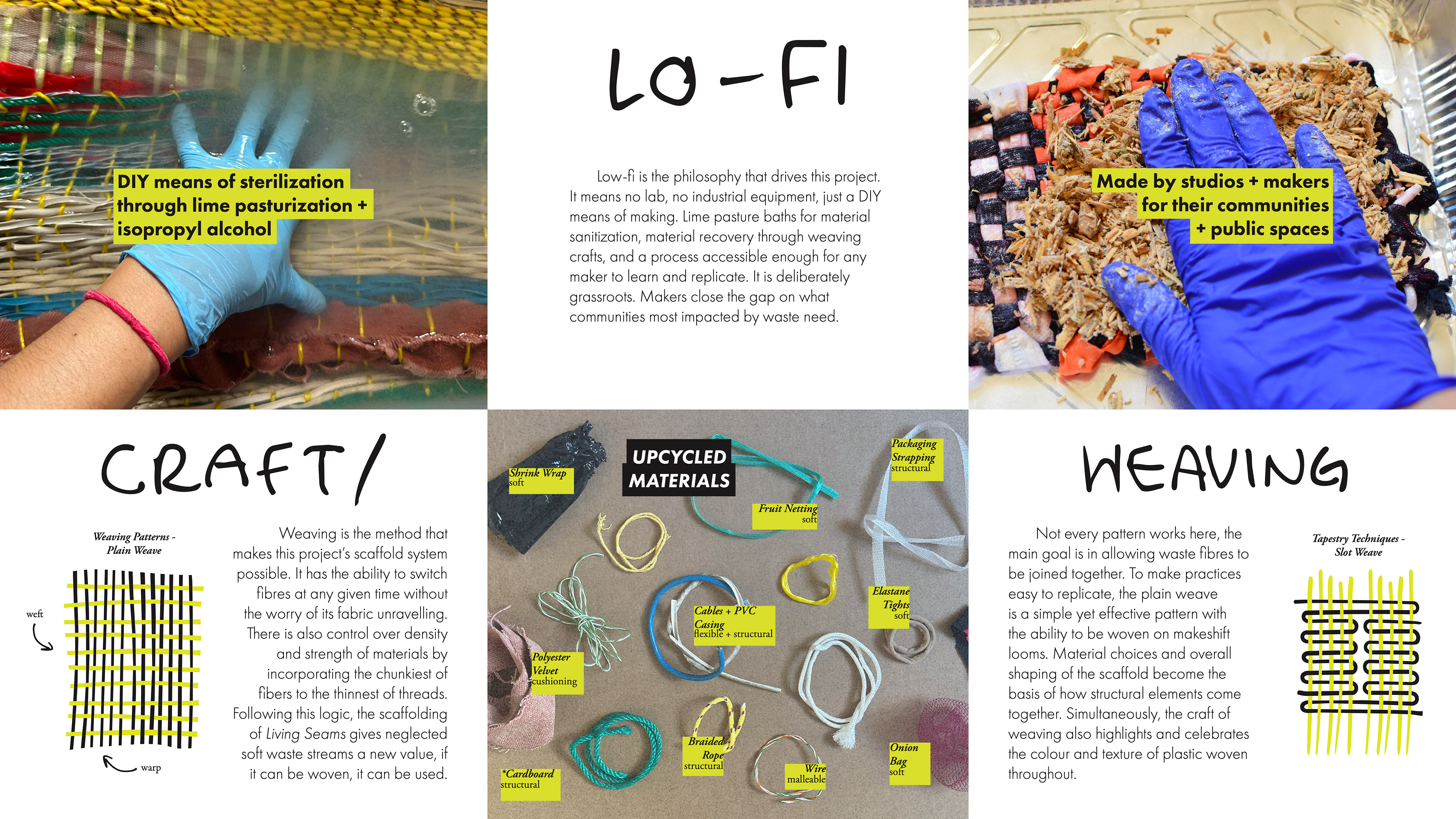
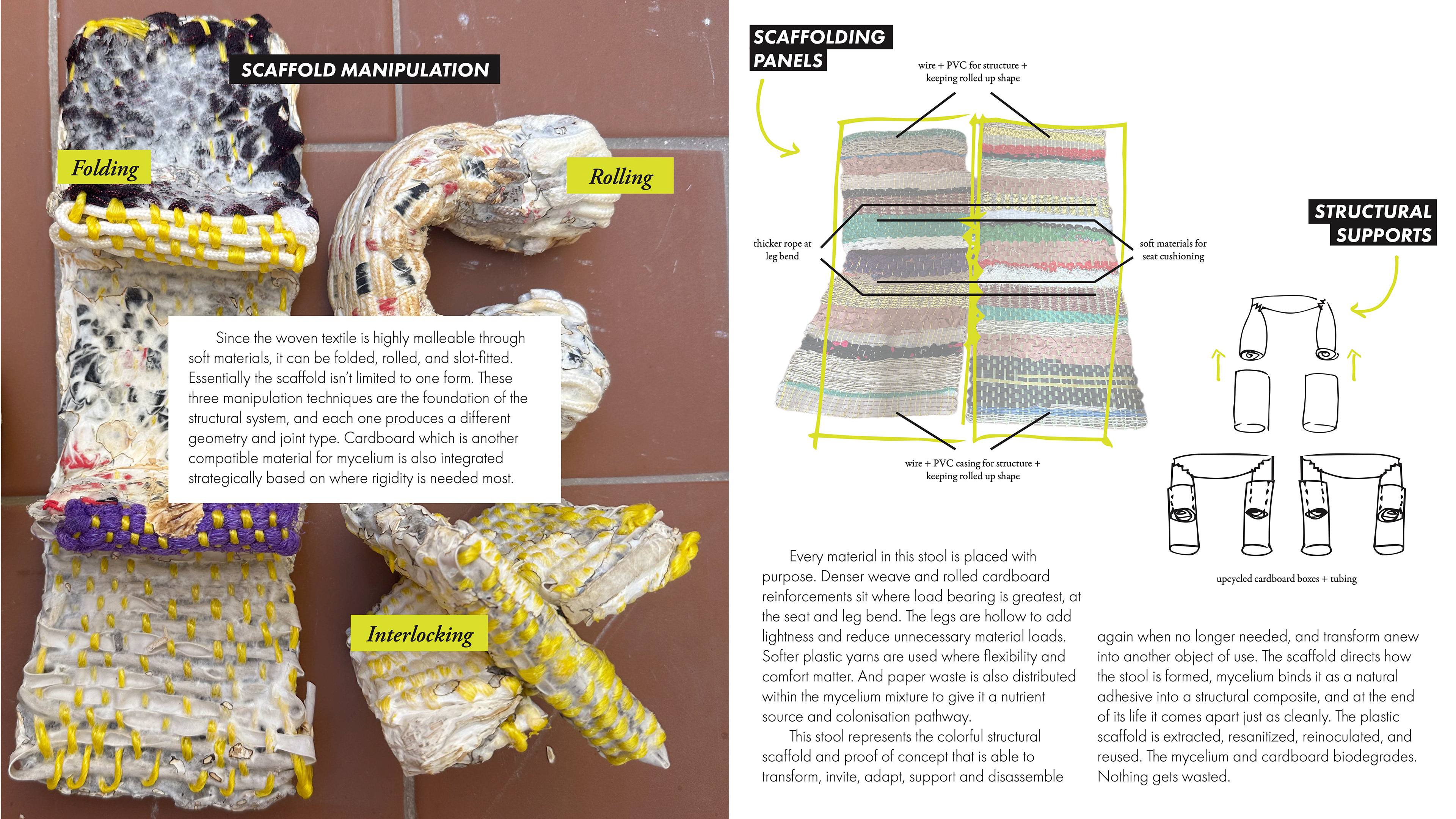
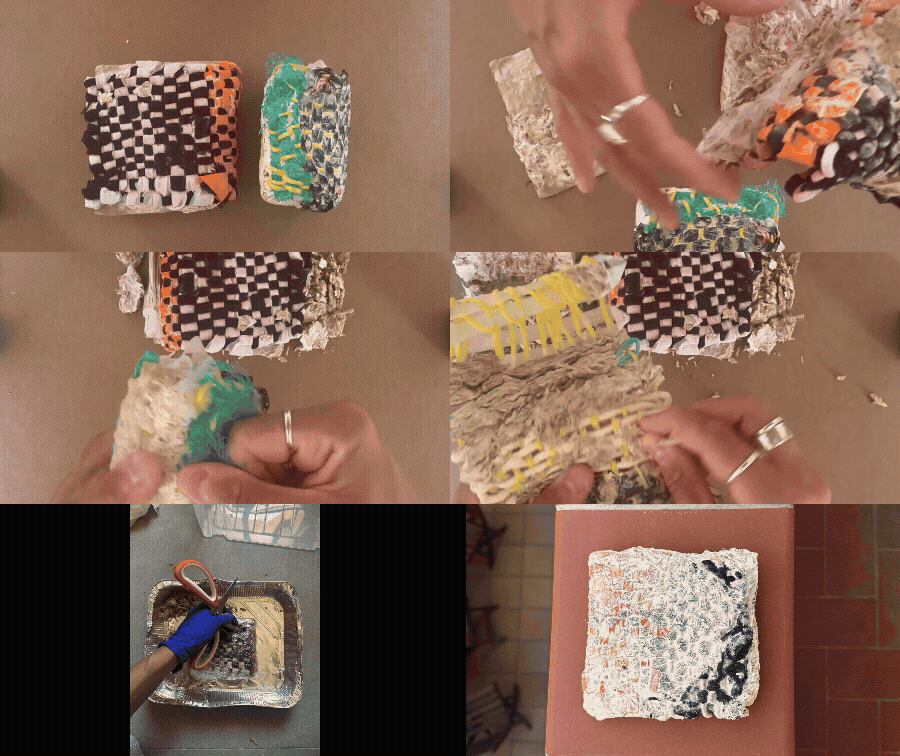
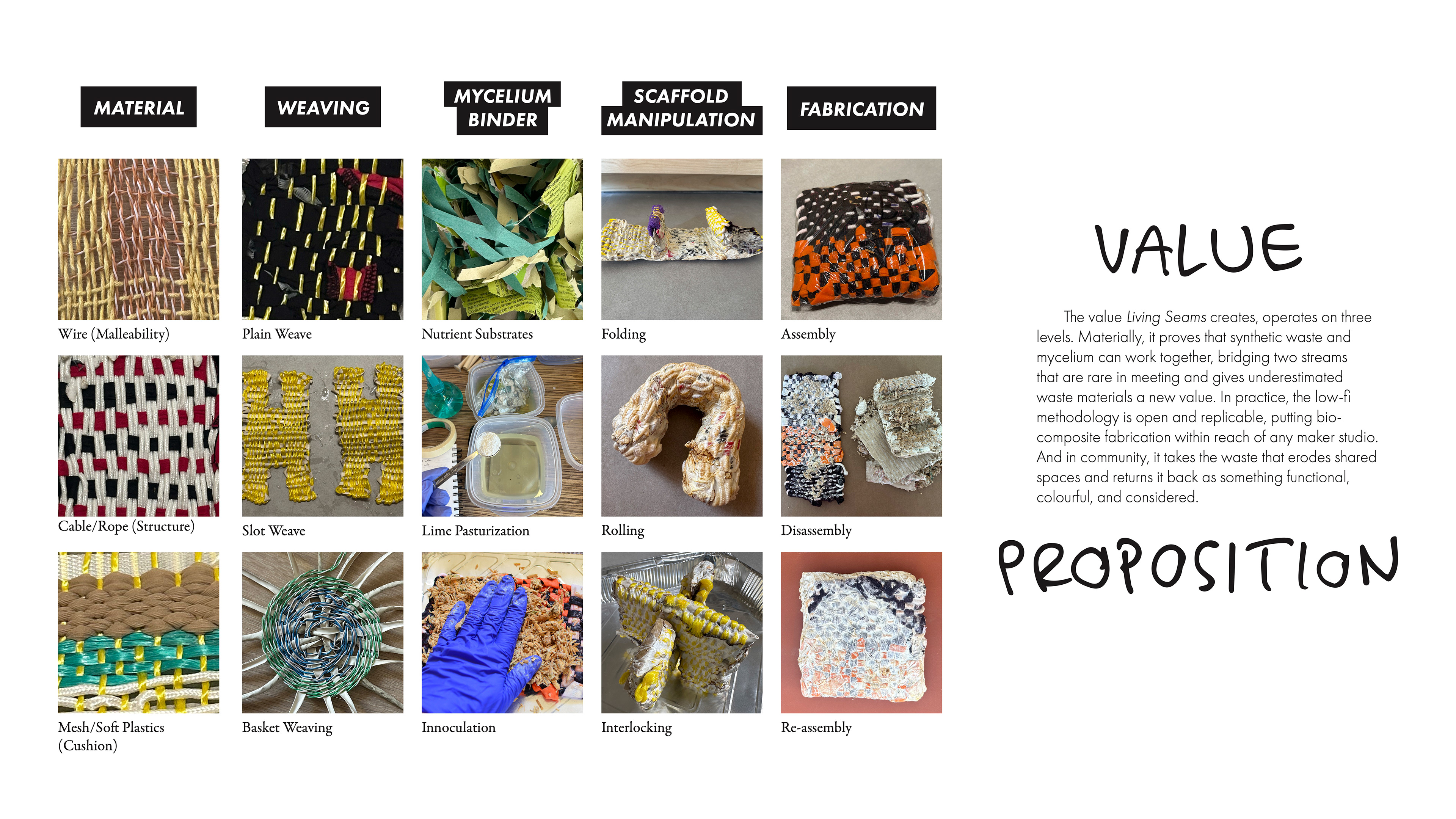
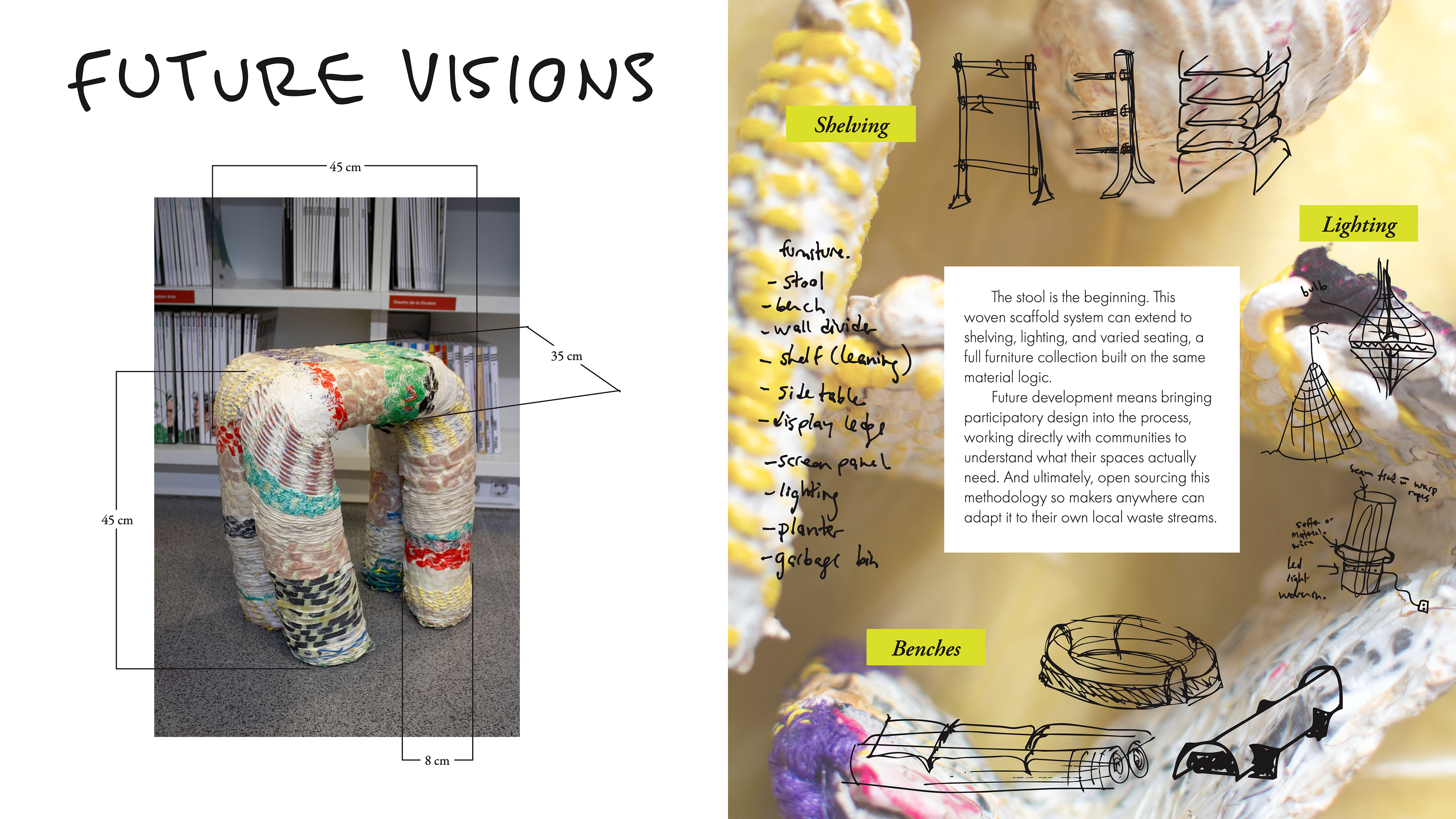
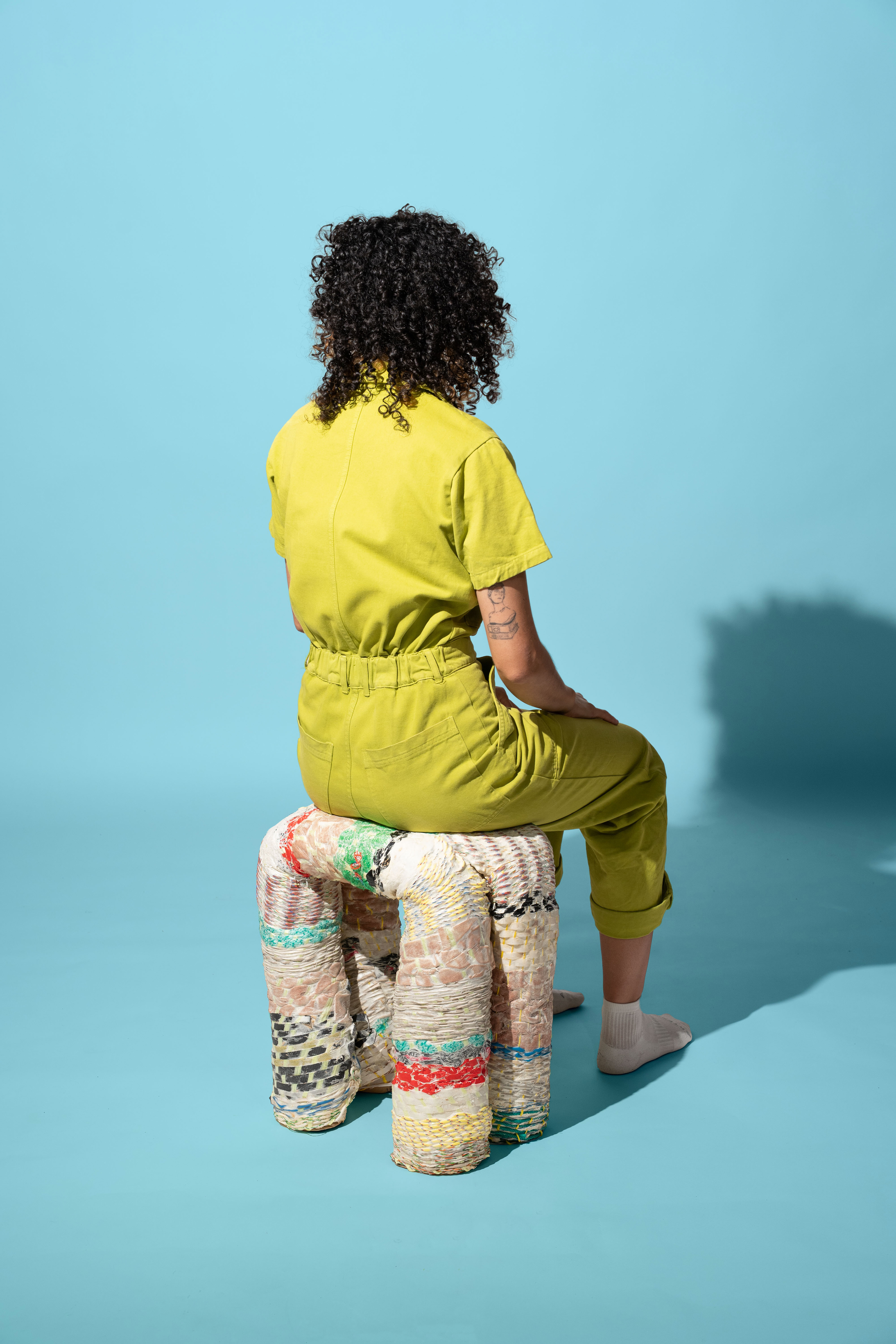
Living Seams, challenges this by exploring the relationship between active, living matter and passive, man-made materials. Using the craft of weaving as a means for material recovery and intentional pattern curation, colour and woven structures transform waste into a unique design language, a reminder that bio-futures need not sacrifice beauty for sustainability. Synthetic waste becomes a supportive scaffold for mycelial growth, which in turn responds as a biological binding agent.
The laminate and bio-welded nature of the material allows transformation into flexible structural forms, while also enabling delamination at the end of its life. It turns accountability into agency, reframes waste as a resource, and prolongs a material's life. Once delaminated, the synthetic scaffold can be reclaimed, repurposed, and reactivated, becoming a support for the next generation of growth.