

The objective of this experiment was in learning how the process of biomineralization works and how to leverage bacteria in producing calcium carbonate crystals around aggregates contained in a submerged mould. Additional testing objectives were in exploring different types of aggregates and mesh screen densities to see if there were any compatibilities of these materials within the biochemical process.
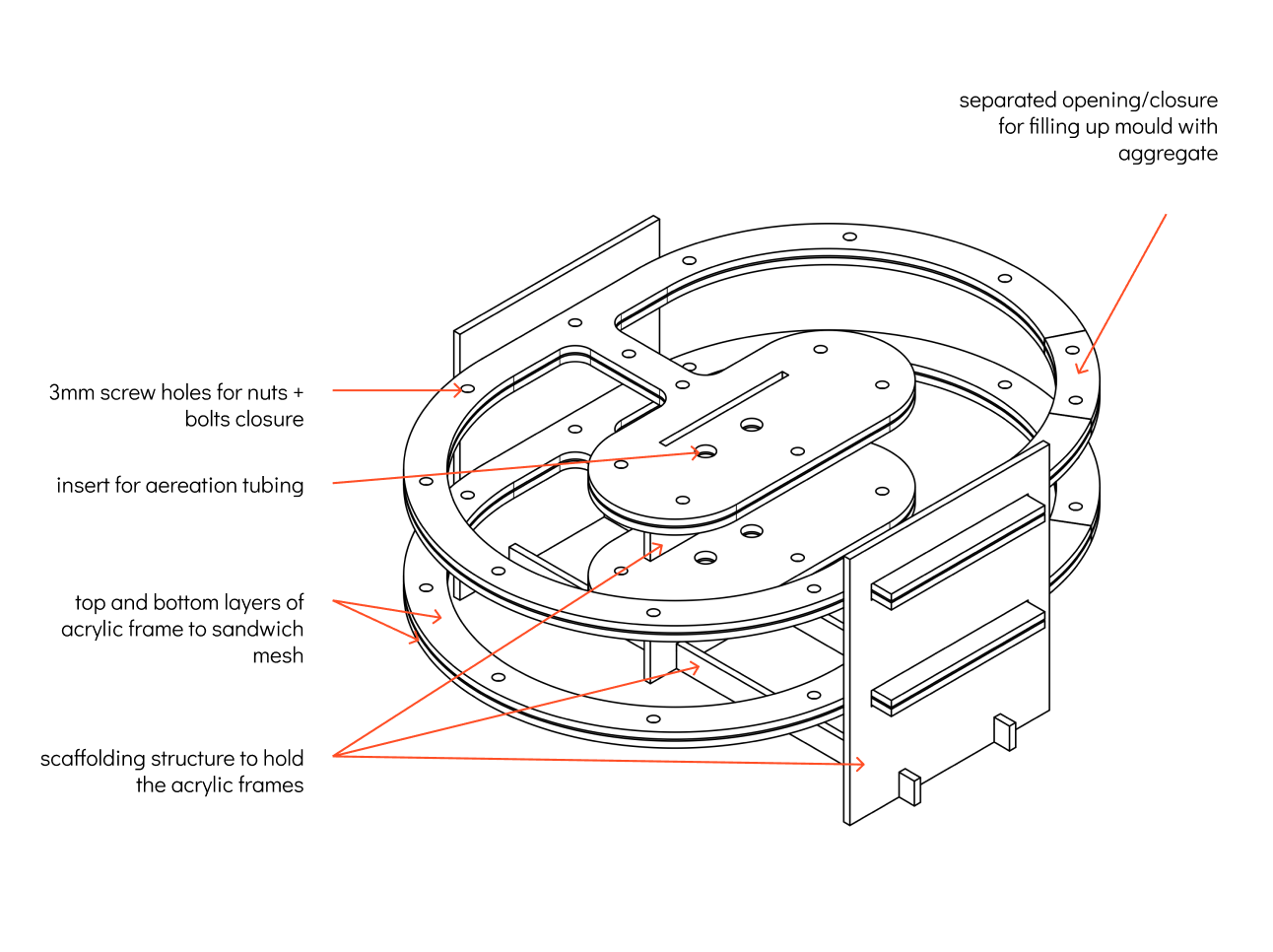
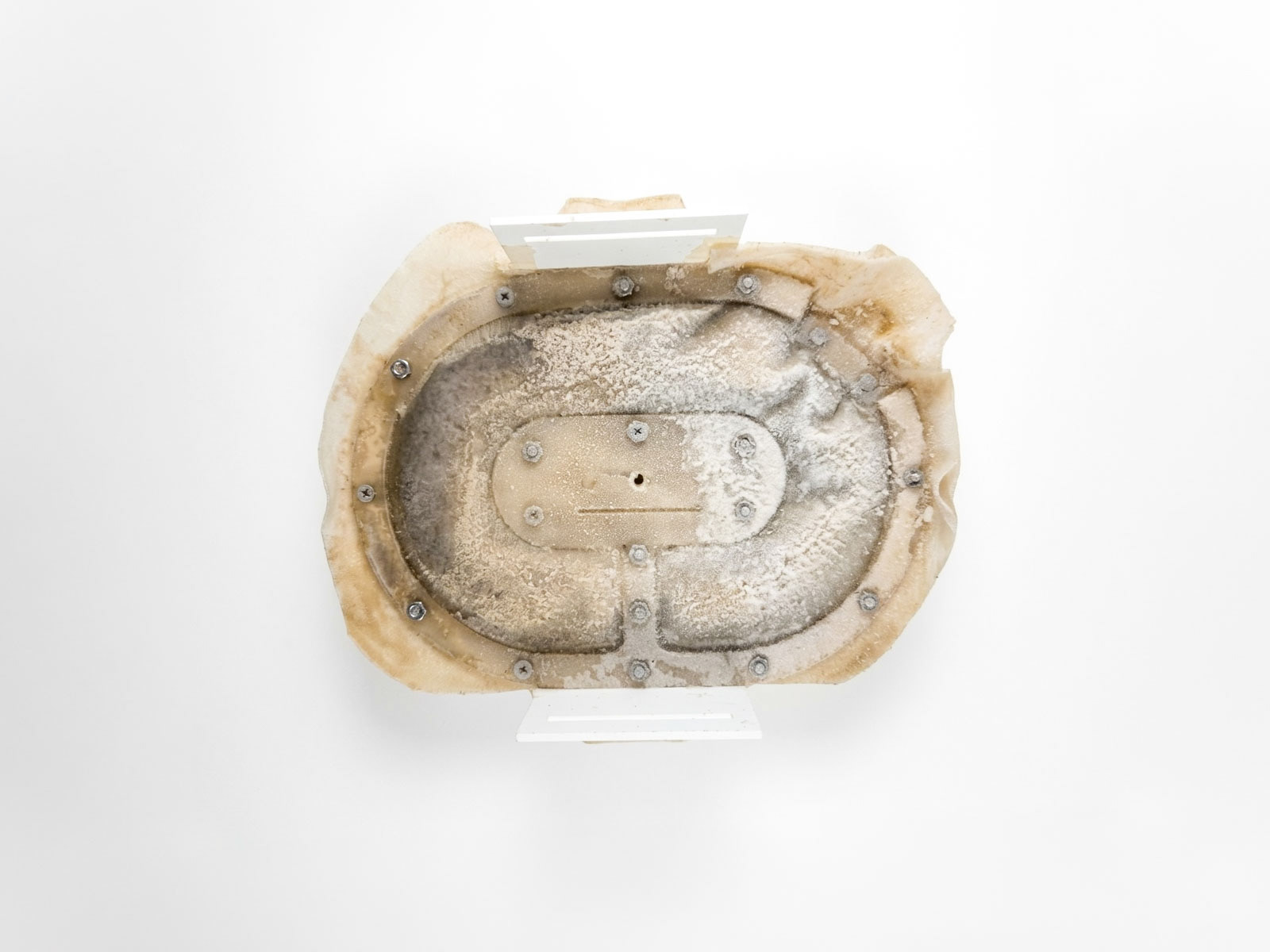
The design of the mould was formed in a C-shape as to create a “chain link” out of the newly mineralized stones. The scaffolded nature of the mould also allowed for the duplication of these links to be formed simultaneously within this experiment.
The process in how MICP occurs is the bacteria Sporosarcina pasteurii breaking down urea into ammonia and carbon dioxide. The release of ammonia increases the pH, resulting in a strongly alkaline environment and causes carbon dioxide to transform into carbonate ions. The solidification process begins when an added source of calcium bonds with the carbonate, producing calcite crystals. It is here that the crystals then grow and fuse between the aggregate, creating the “stone" like structure.
After mixing the bacteria in a liquid growth media to ensure optimal growth environments, we prepped 4 varying mixtures of aggregates (in size and type) with the main experimental materials being grapeseed and beach sand grains.
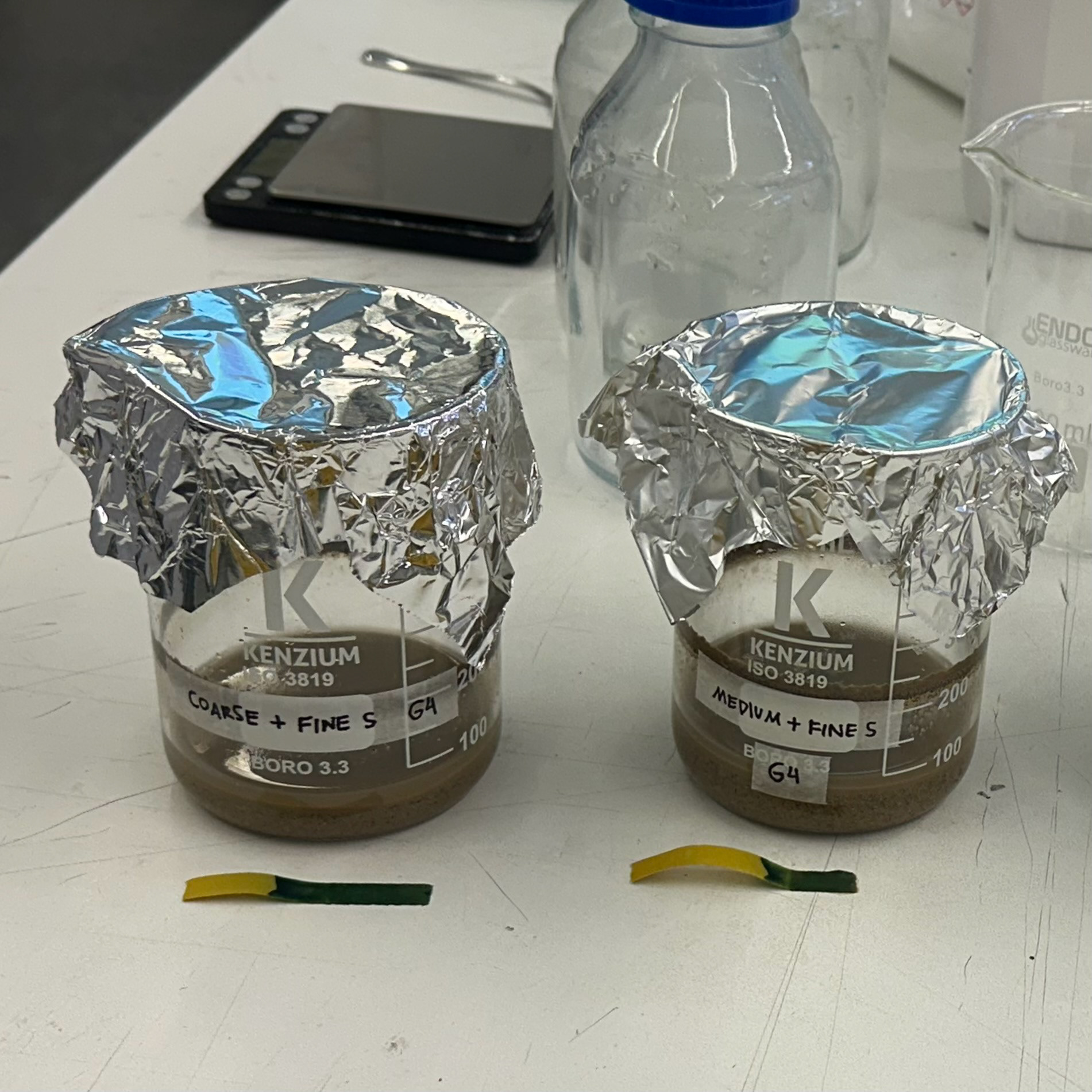
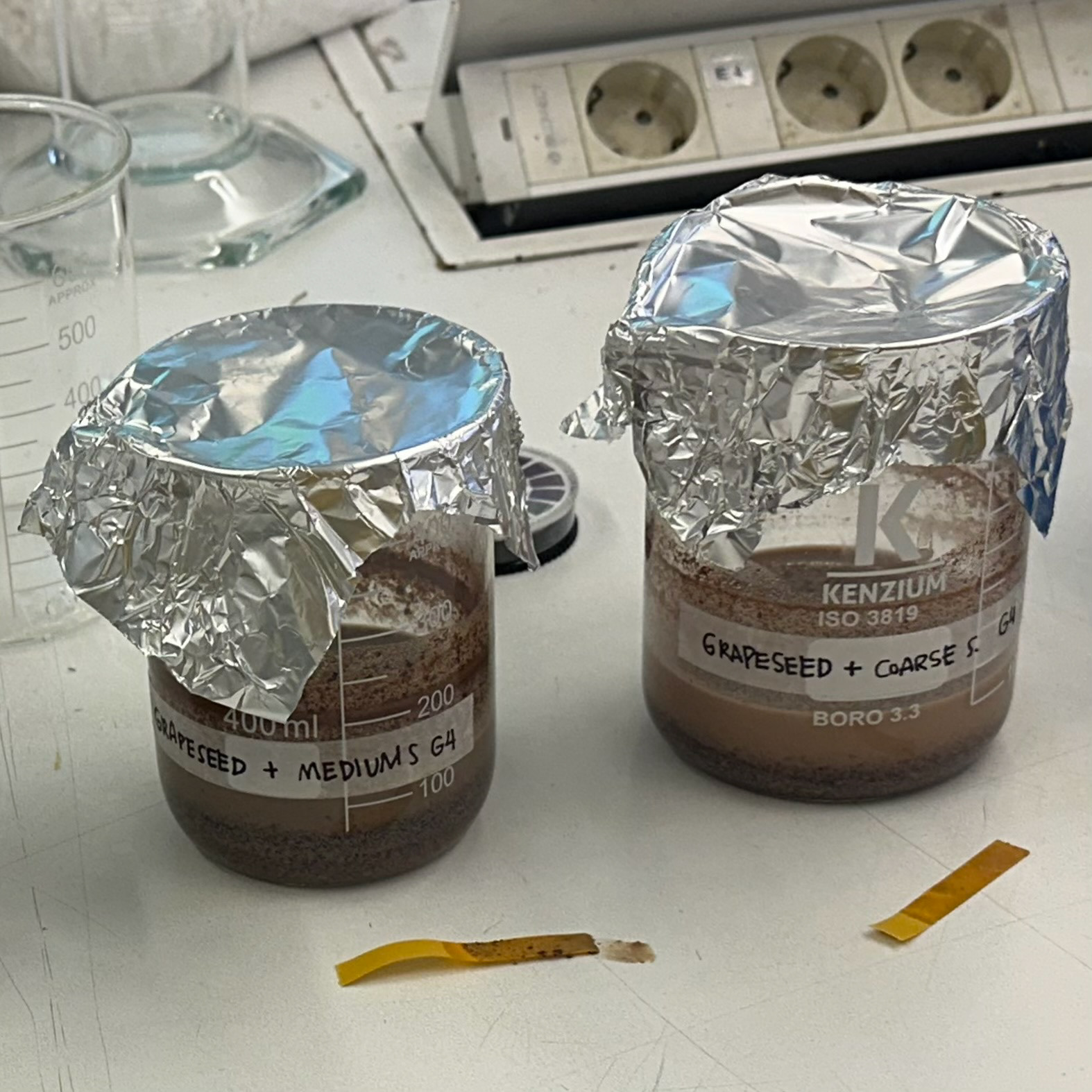
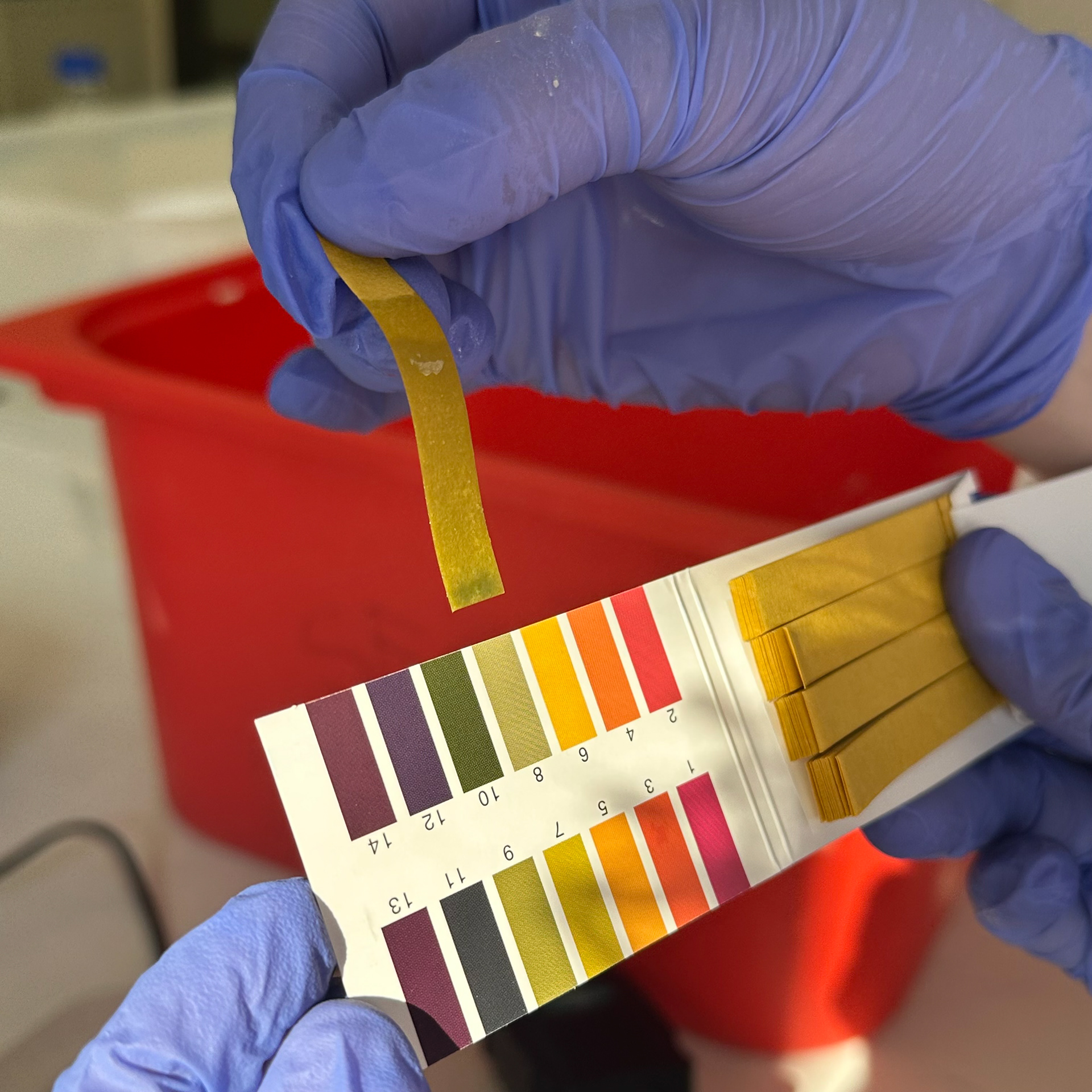
As we got ready to pour the aggregates into the moulds, we found that all mixtures using grapeseed were not a compatible fit for the MICP process. The mixture only had a pH of 6, indicating the bacteria was not active and couldn’t be used moving forward.
*It was later discovered that grapeseed is high in polyphenols which is antibacterial thus interfering with the survival of Sporosarcina pasteurii bacteria to perform ureolysis.
Working with just the one mould and the beach sand only aggregates, we filled the mould cavity with the sand substrate (enclosed in a fine mesh), prepared the cementation solution and water heater, routinely changed out the urea bath, and over the course of 3 weeks observed the biomineralization of the chain link.
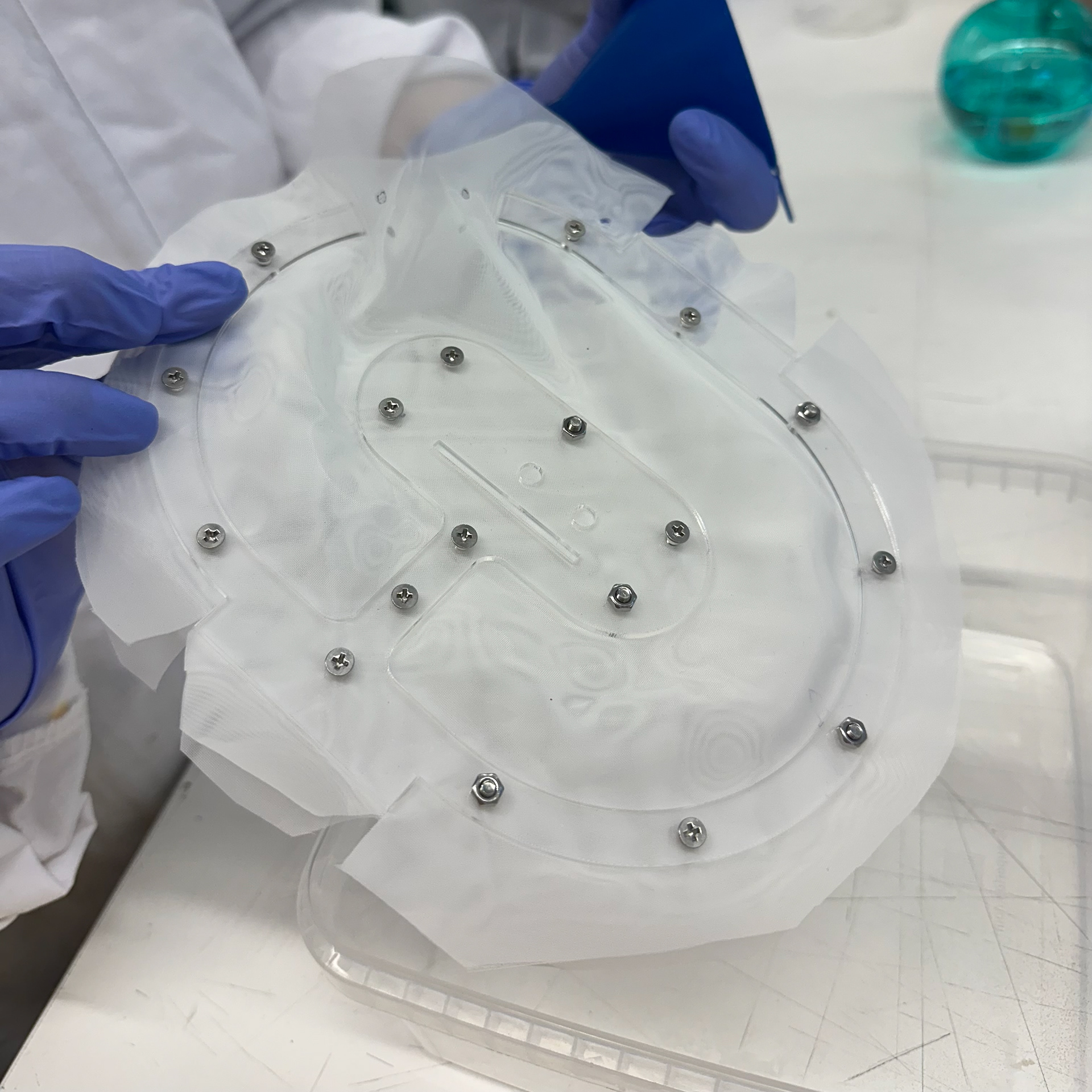
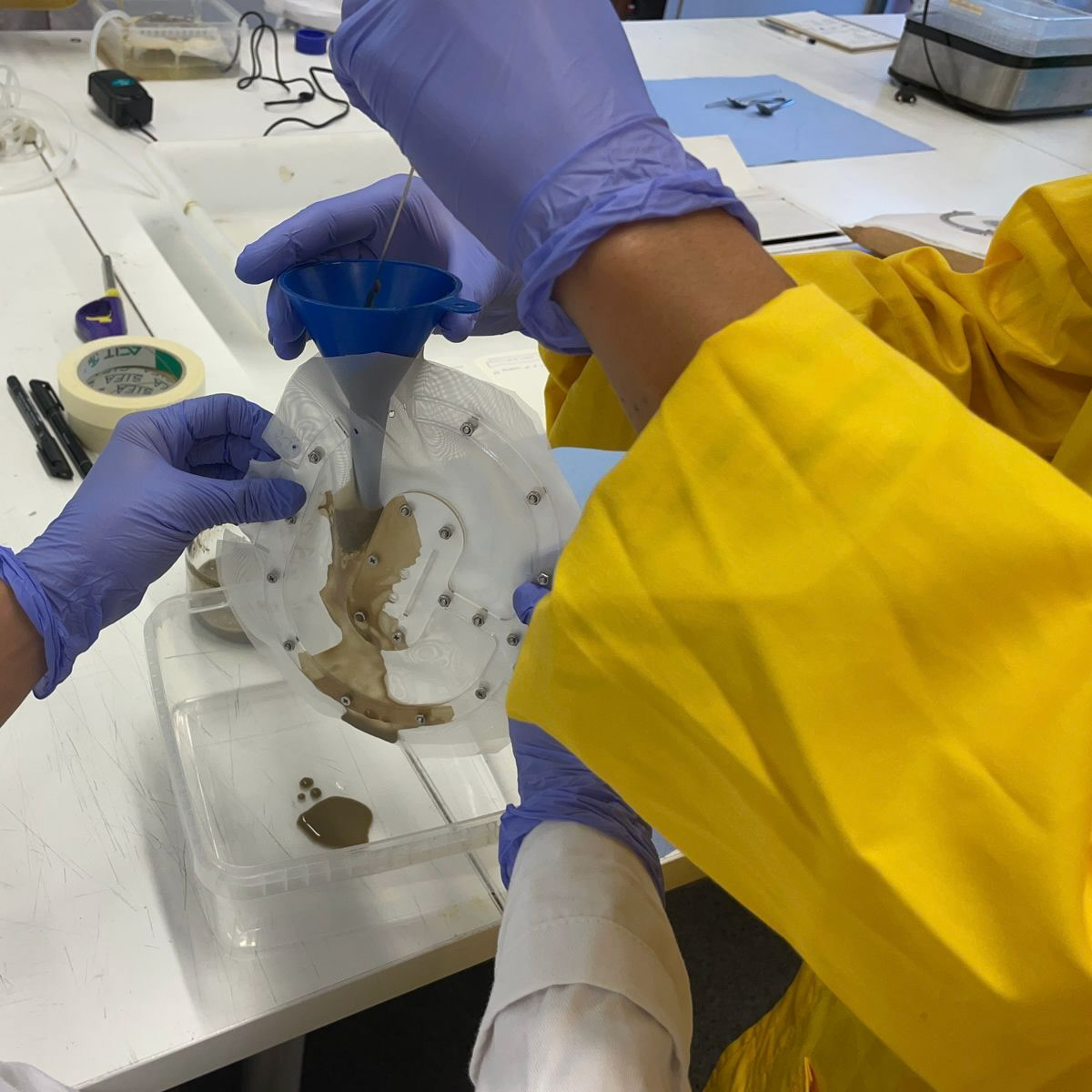
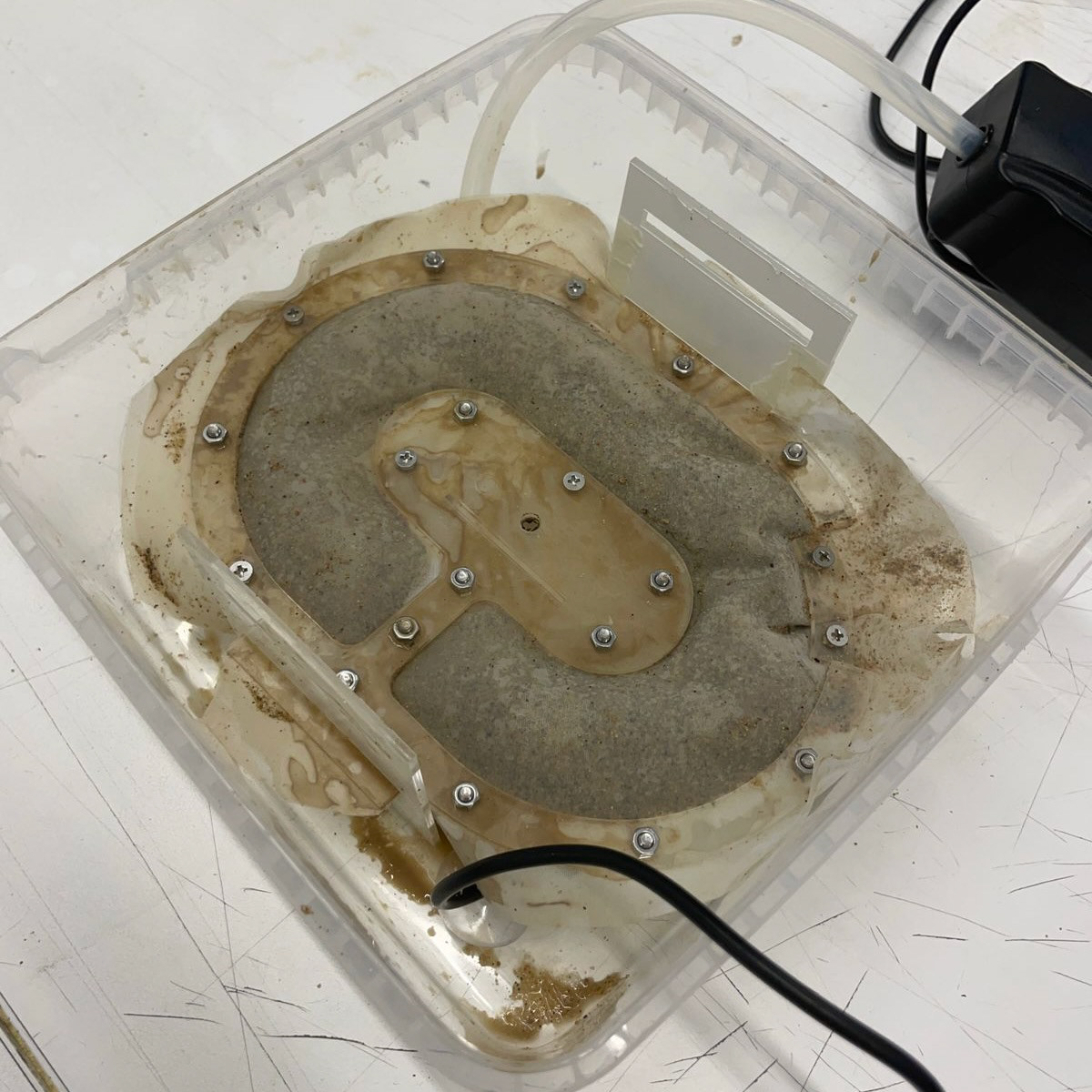
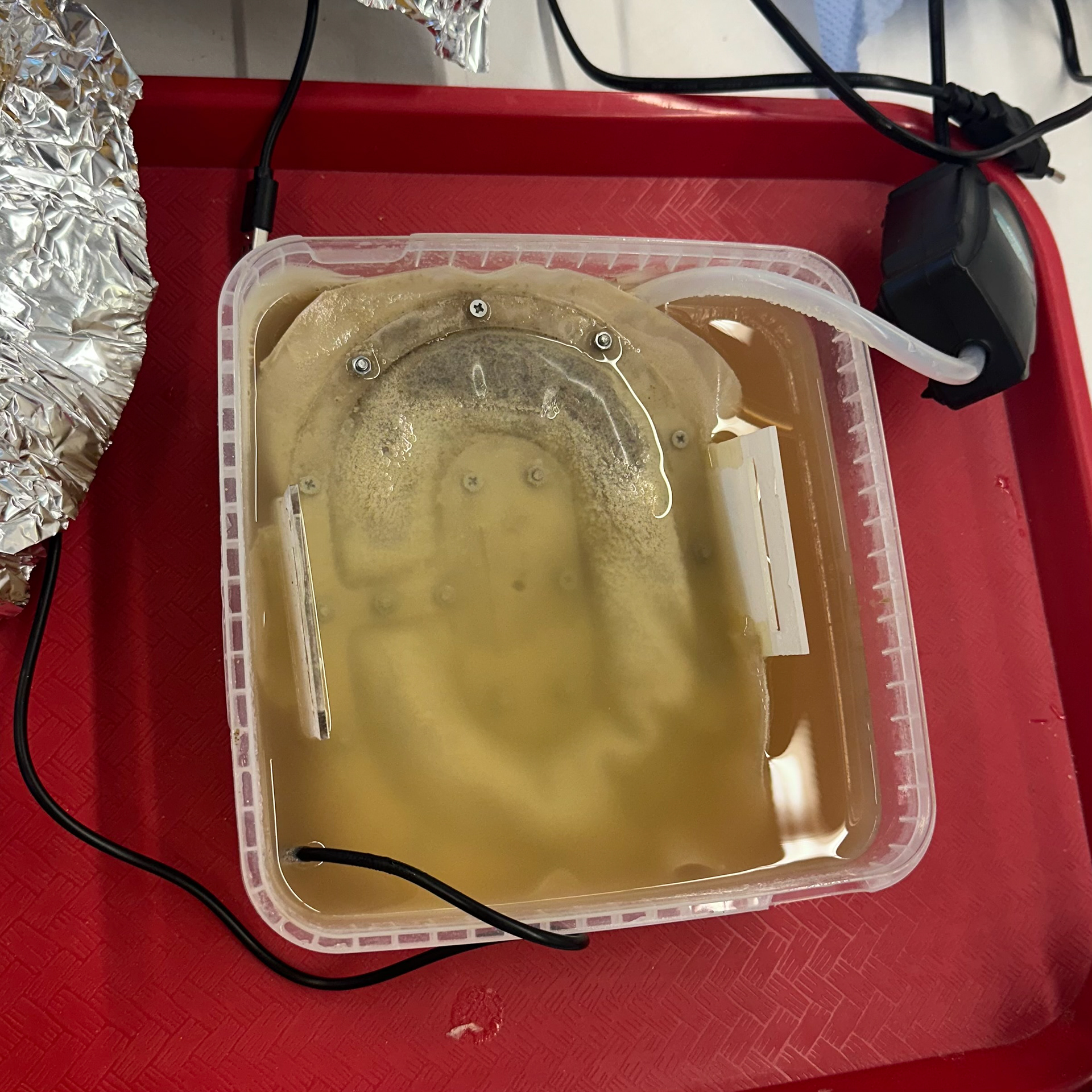
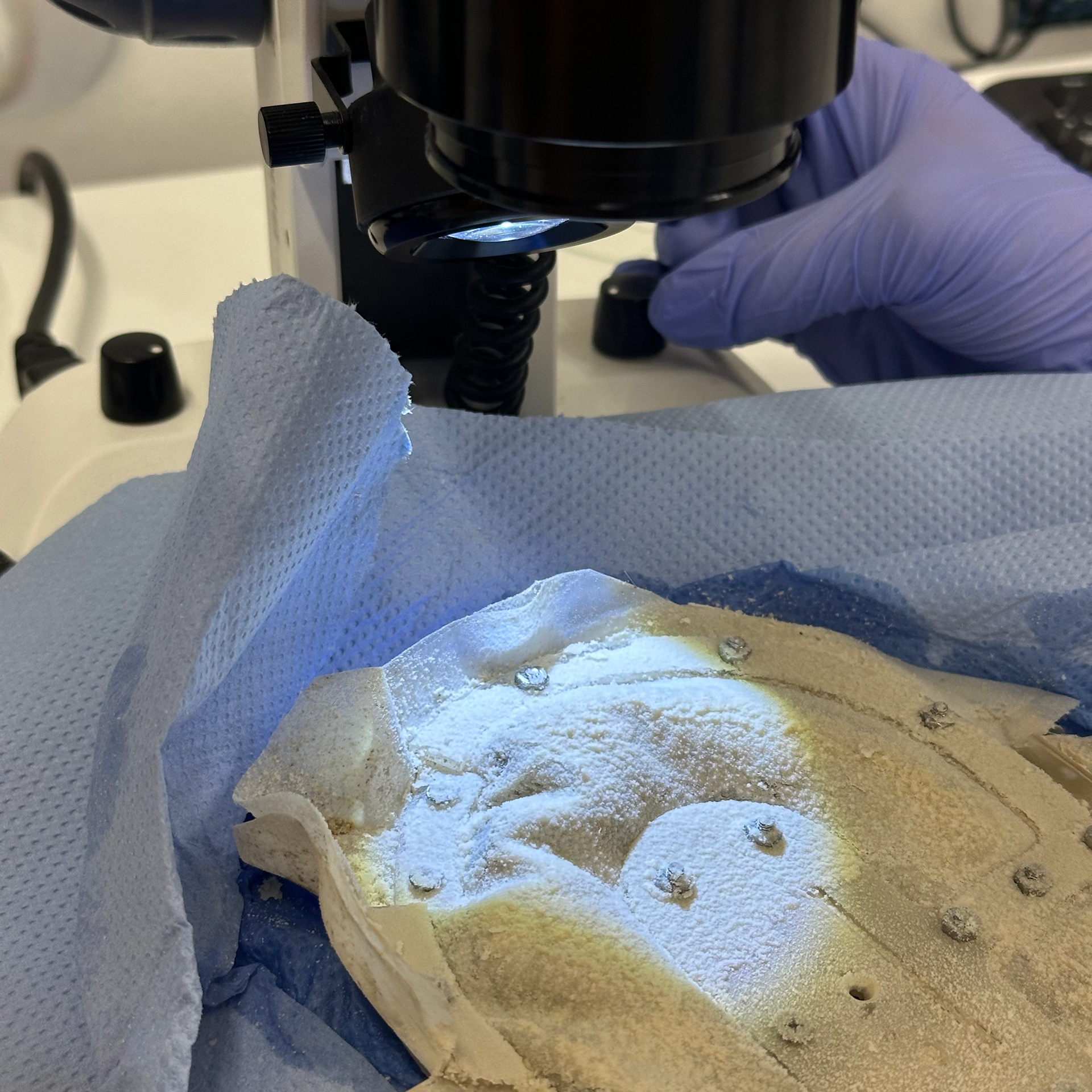
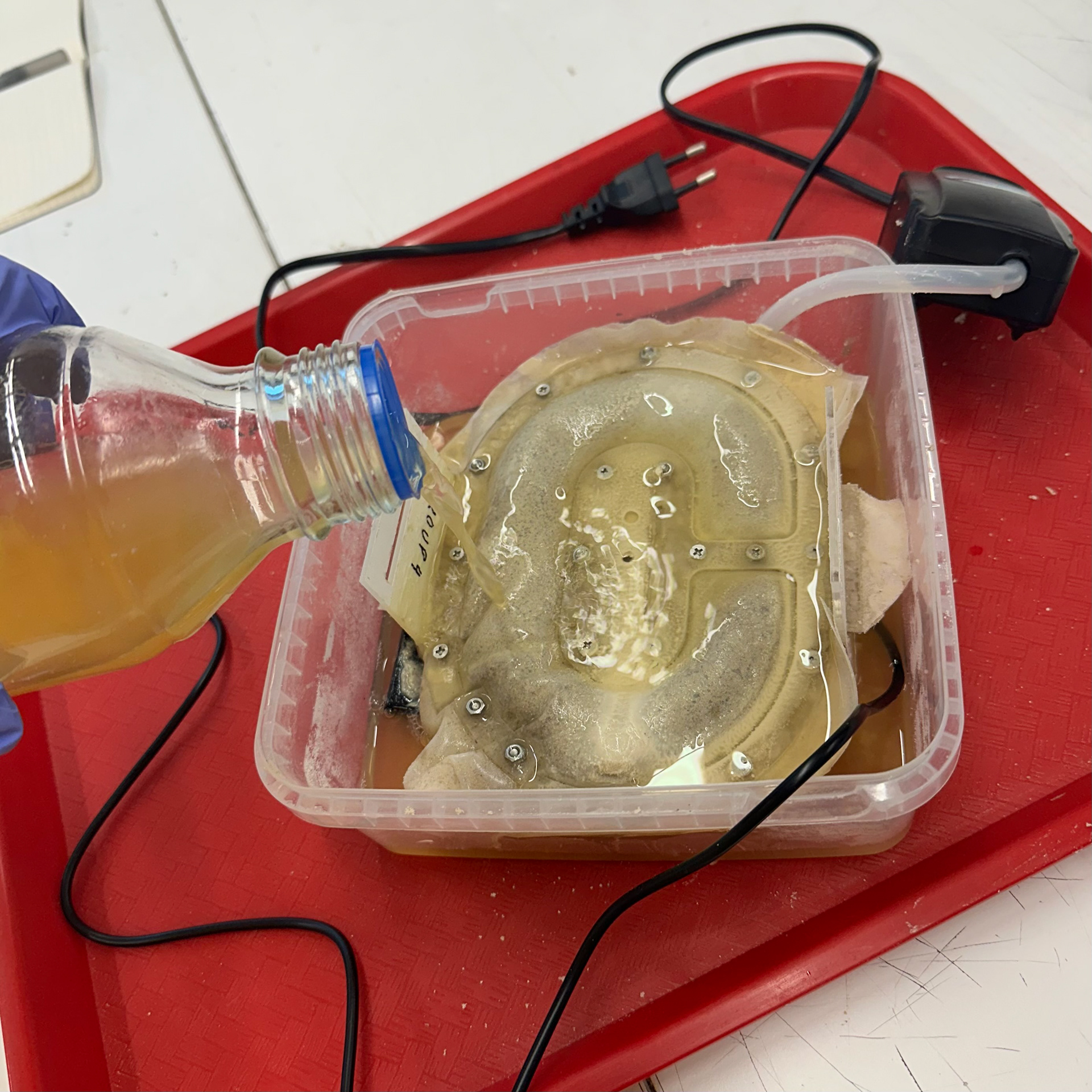
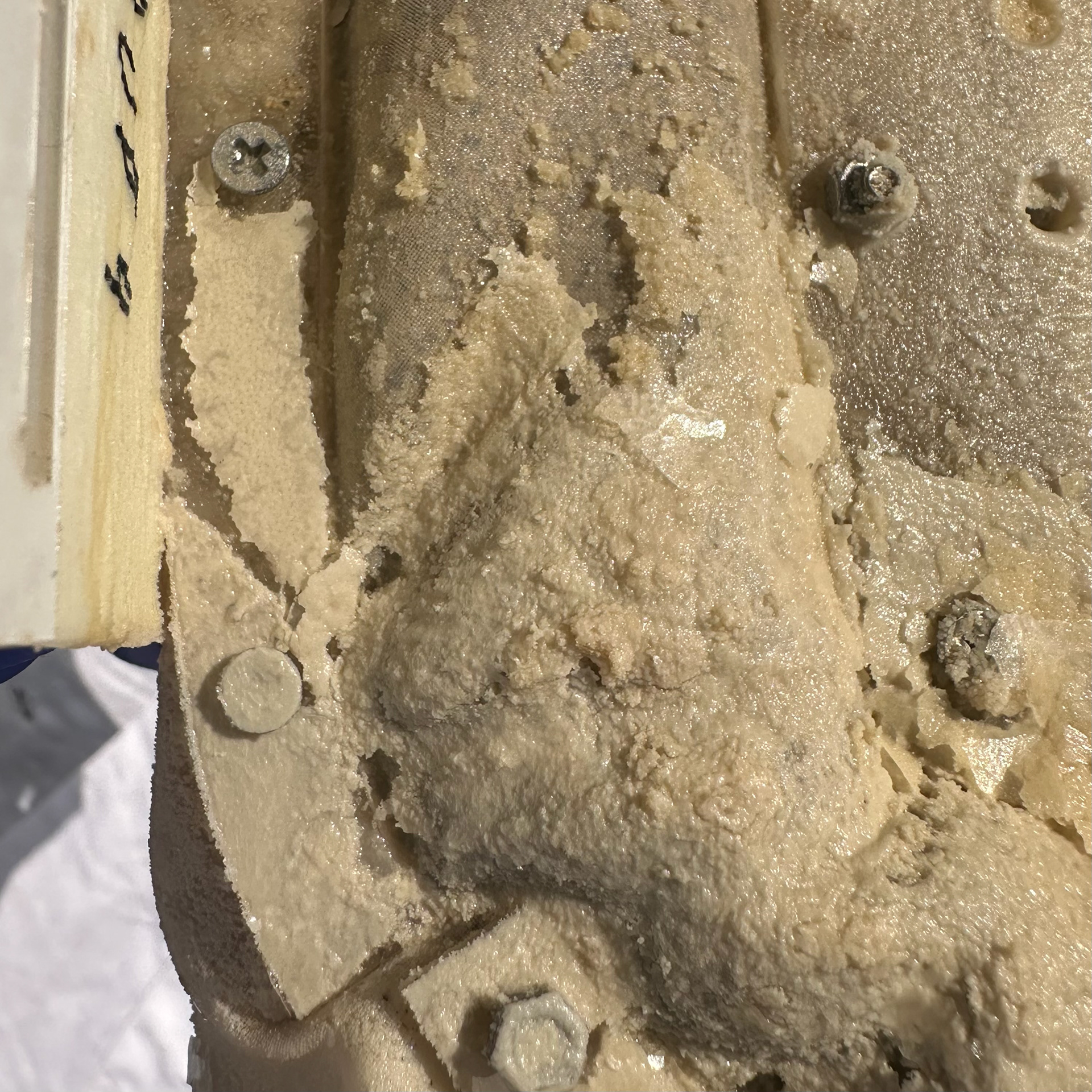
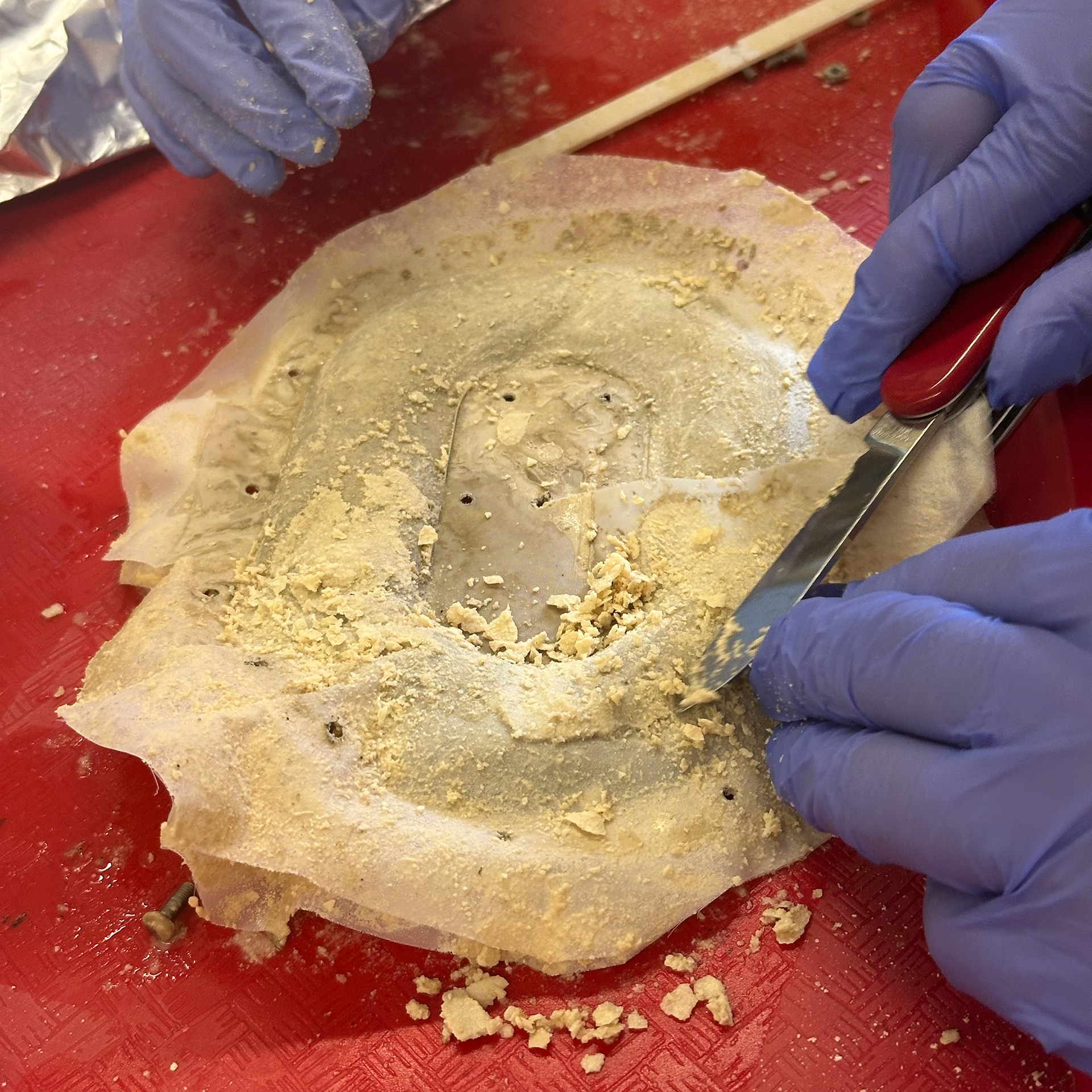
While the beach sand aggregate was a compatible material for the cementation process (seeing as there was crystallization on the surface), there were complications with the mesh of choice in the disassembly stage. The mesh surface had too fine of an opening that it didn’t allow for a deep permeation of the urea solution into the mold. Instead, it created a thin layer and stunted growth of crystals along the surface of the mesh. As a result, the chain link was very fragile and crumbled entirely in the disassembly stage.
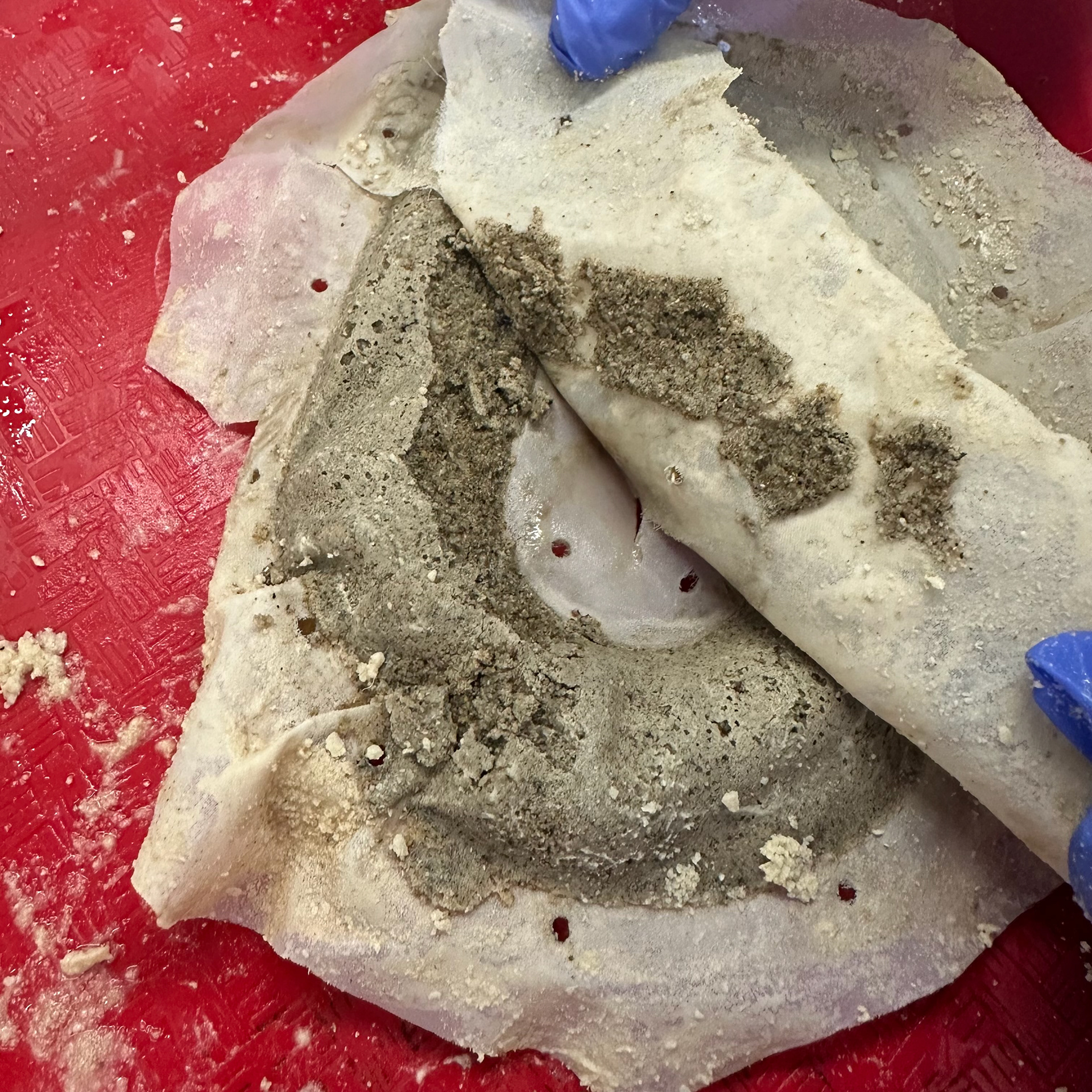
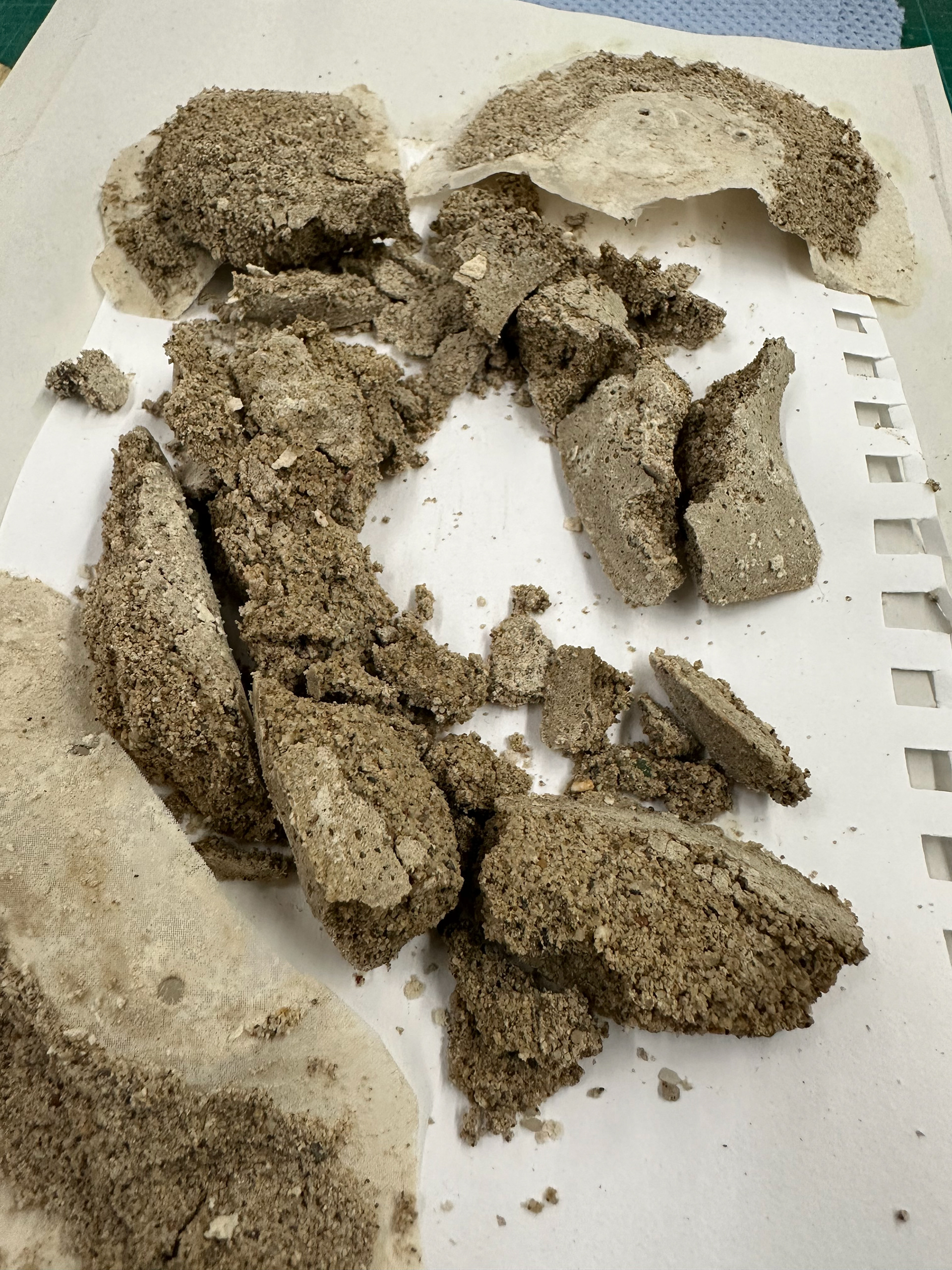
There was much learned from this experiment and to replicate it more successfully, we identified a few procedures that would need to be improved upon.
1. Choosing an appropriate size of mesh (must be larger than 149µm)
2. Grapeseed is not a viable aggregate material
3. The design of the “C-shaped” mould require more openings for easier filling
4. Using larger and fewer nuts and bolts all across the mould frame for easier assembly and disassembly
5. A sturdier scaffold stand to allow for more air flow and a weighted base to prevent the mold from floating to the surface (must be fully submerged for successful crystallization)